
China would contribute $41bn towards the pool. Brazil, India and Russia would contribute $18bn each; South Africa $5bn.

Indian frontline benchmarks - the S&P BSE Sensex and the Nifty50 - have rallied around 12 per cent each since June-end and outperformed their global peers by a wide margin. On Thursday, the US Fed hiked interest rates by another 75 basis points (bps) - the third such hike this year - and surprised the markets by projecting further sizable hikes in the coming months. With the latest hike, the Fed fund rate (FFR) now stands in the range of 3 - 3.25 per cent and is highest since January 2008.

The Federal Reserve, whose policy-setting Federal Open Market Committee concludes a two-day meeting on Wednesday, has said it expects to keep short-term interest rates exceptionally low to help support the economy.
The Federal Reserve's move comes a week after it trimmed 0.75 per cent of the fund rate owing to concerns that the US economy was headed towards a recession.

The Indian equity market is likely to remain under pressure and rangebound over the next few months. This comes as global central banks, led by the US Federal Reserve look at a possibility of hiking rates aggressively to tame inflation. Back home, the Reserve Bank of India, too, remains data dependent in its endeavour to keep inflation in check and pursue an aggressive monetary policy stance.
The central bank also left the benchmark rates unchanged in the range of 0 to 0.25 per cent. The Federal Open Market Committee which decides on the key rates has retained the same near zero and said economic conditions warrant 'exceptionally low levels' of federal fundsfor a longer period.
The US Federal Reserve on Tuesday cut interests rates by 0.75 points from 3 per cent to 2.25 per cent. The cut initially disappointed markets which had risen sharply on hopes of a 1 percentage point cut. The decision was taken by eight votes to two. First quarter earnings at the two Wall Street firms fell less than analysts had expected, easing concerns about the state of the investment banking sector.
The cut is being seen as an emergency measure to boost the US economy.

The US Federal Reserve has said economic activity is improving while deciding to continue with the near-zero interest rate regime to bolster the economy.

Invest with a 5 to 7 year horizon so that you are able to ride out price volatility and benefit from the long-term trends of demand and macroeconomic shifts.

Activist Manoj Jarange vows to intensify his hunger strike for Maratha reservation under OBC, while the Maharashtra government seeks legal opinion on the issue.

Sensex and the Nifty reached an intra-day low of 19,318 levels and 5,845 mark, respectively.
The market capitalisation of BSE-listed firms reached an all-time high of Rs 299.90 lakh crore on Wednesday despite the Sensex falling marginally after a remarkable record-breaking rally in the last few trading sessions. The 30-share BSE Sensex dipped 33.01 points or 0.05 per cent to settle at 65,446.04, after rallying in the past five trading straight sessions. During the day, the benchmark hit a low of 65,256.49 and a high of 65,584.33.
"Indian markets (are) well placed to absorb the US Fed rate hike. Gradual approach in future increases augurs well for emerging markets," Economic Affairs Secretary Shaktikanta Das has tweeted.

In the backdrop of an over four-decade high inflation, the US Federal Open Market Committee has raised its key policy interest rate by 75 basis points to 2.25-2.50 per cent, anticipating that the increase in the interest rates will be "appropriate". Hiking interest rates typically cool demand in the economy, thereby putting a brake on the inflation rate. The US Federal Reserve in its June meeting too raised the interest rate by 75 basis points, which was the steepest hike since 1994.

From the Sensex pack, Bajaj Finance, Bajaj Finserv, Reliance Industries, Wipro, HDFC Bank, HDFC, ICICI Bank and Tata Steel were the major laggards. ITC was the lone winner in the Sensex pack.
The yellow metal fell by Rs 115 to Rs 26,715 and silver lost Rs 400 to Rs 40,350 per kg.
The Federal Open Market Committee's statement after meeting in Washington said inflation has been "elevated" and remains a risk, using words identical to the last decision on June 29.\n\n
Traders rejoice when the Fed drops the rate, but...

Dollar's strength and falling crude oil prices force downward revision of 2015 growth forecast.

The Reserve Bank of India (RBI) is expected to cut interest rates for the first time in nearly five years in Governor Sanjay Malhotra's first monetary policy committee (MPC) meeting on Wednesday. The meeting of the six-member MPC, which will culminate on Friday, aims to boost sluggish economic growth, which is seen falling to a four-year low. Malhotra took charge as the 26th RBI governor in December last year.

The recent weakness of the rupee has been due to yuan's devaluation.

From the Sensex pack, Tata Motors, Sun Pharma, Wipro, Tata Consultancy Services, UltraTech Cement, Tech Mahindra, Bajaj Finserv, HCL Technologies, Infosys and IndusInd Bank were the major laggards. NTPC, Power Grid, Reliance Industries, Tata Steel, HDFC and HDFC Bank were the major winners.
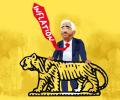
India's prices are rising faster than many of its emerging market peers. The country's inflation print for May at 4.25 per cent is a marked reduction from the levels seen in May 2022 (7.04 per cent). However, even though the inflation rate remains within the Reserve Bank of India's medium-term target of 4 per cent, with a 2 per cent margin on either side, it continues to be higher than China, Russia, and Brazil.
Equity indices staged a pullback on Tuesday after three days of declines as investors scooped up IT, metal and consumption stocks amid a largely positive trend overseas. A recovery in the rupee added to the momentum, traders said. Overcoming a wobbly start, the 30-share BSE Sensex climbed 274.12 points or 0.45 per cent to settle at 61,418.96.

Equity benchmark BSE Sensex closed at an all-time high of 62,272.68 on Thursday, tracking a firm trend in global markets after the US Fed minutes indicated a slower pace of rate increase that bolstered investors' sentiment. Extending its rally to the third straight day, the 30-share BSE benchmark rallied 762.10 points or 1.24 per cent to settle at 62,272.68, its record closing peak. During the day, it jumped 901.75 points or 1.46 per cent to its lifetime high of 62,412.33.he broader NSE Nifty gained 216.85 points or 1.19 per cent to end at 18,484.10.

Benchmark equity indices Sensex and Nifty ticked higher for the ninth straight session on Thursday, buoyed by fag-end buying in banking, financial and realty stocks amid encouraging domestic retail inflation data. Weak trends in IT counters and fall in the overnight US equity markets triggered by fresh concerns over recession, however, put a check on market's uptrend. In a largely subdued session, the 30-share BSE Sensex went up marginally by 38.23 points or 0.06 per cent to settle at 60,431.

RBI will take a cue from the Fed policy statement.

The markets are in bubble territory.

Foreign flows into Indian equities are expected to pause in the short to medium term, say analysts. The outlook is influenced by multiple factors, including rising oil prices, actions from global central banks, climbing bond yields, and the dollar index gaining prominence. "Valuations appear rich with the markets at record highs.

The rupee rose by 12 paise to close at 79.78 against the US dollar on Monday due to a weak dollar in overseas markets and an improved appetite for riskier assets. Stronger regional currencies also supported the rupee sentiment ahead of the US Fed policy decision on Wednesday. Weak domestic equities and FII outflows, however, capped sharp gains. At the inter-bank forex market, the local unit opened at 79.86 against the greenback and moved in a range of 79.70 to 79.87 in the day trade.
New India Assurance and Niva Bupa have invested in the Bima Sugam India Federation.
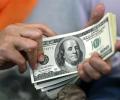
Strong currency and sagging oil prices are spooking policymakers.

Gold jumps on good seasonal support; silver extends losses.

Over the past week, the Sensex and the Nifty continued the bull-run

Sebastian Coe, frontrunner for the International Olympic Committee (IOC) presidency, has hailed the inclusion of cricket in the 2028 Los Angeles Games, stating it will open up new markets, crucial for the Olympic movement's growth. He emphasized the sport's extensive support base beyond South Asia, particularly in major cities with large South Asian communities.
